Week 1 · 12 min
From no. 1 to the first triplets
By the end, you can distinguish the simultaneous attacks of no. 1 from the triplets in nos. 2–10.
Lesson steps
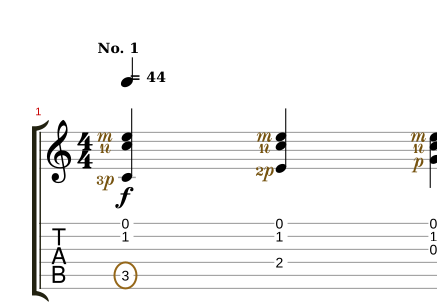
1 Giuliani 1
Play the three notes together on each beat.
3 min · 40 bpm · 1 note per click

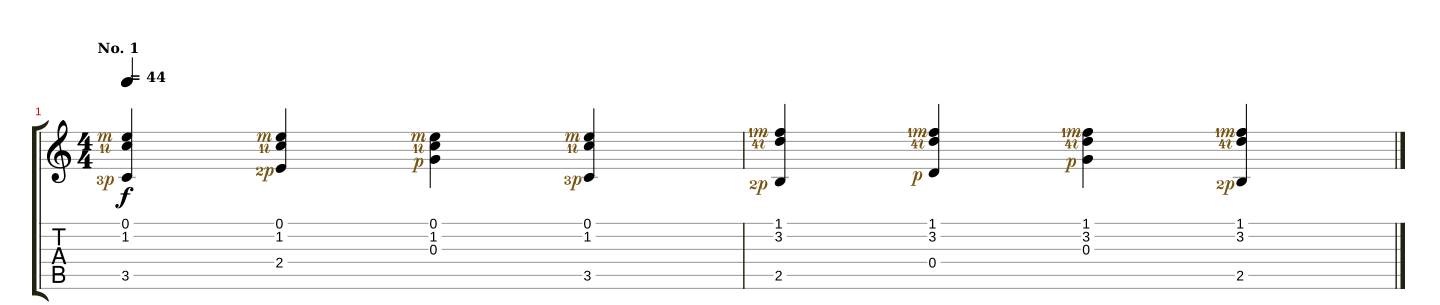
Check for · 2 bars at 48 BPM — All three notes start together on each of the four beats.
More detail
The C bass notes follow strings 5, 4, 3, 5. Both upper notes sound with each bass.
2 Towards Giuliani No. 2
Play the bass at the start of each p-i-m group on the click.
3 min · 40 bpm · 3 notes per click

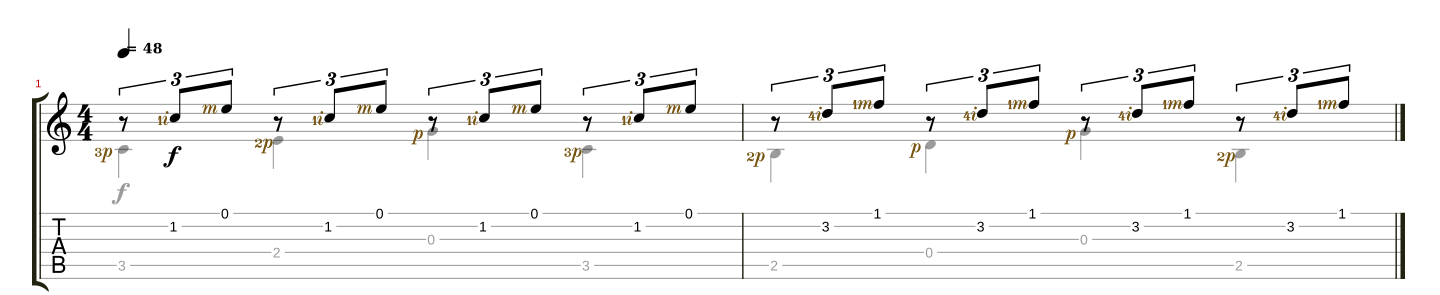
Check for · 2 bars at 48 BPM — You hear three evenly spaced notes per click.
More detail
No. 2 of Giuliani’s first ten patterns alternates C and G7. A triplet divides a beat into three equal parts. Follow the moving bass.
3 Giuliani 2–5
Practise one pattern from 2–5 on C and then on G7.
3 min · 40 bpm · 3 notes per click

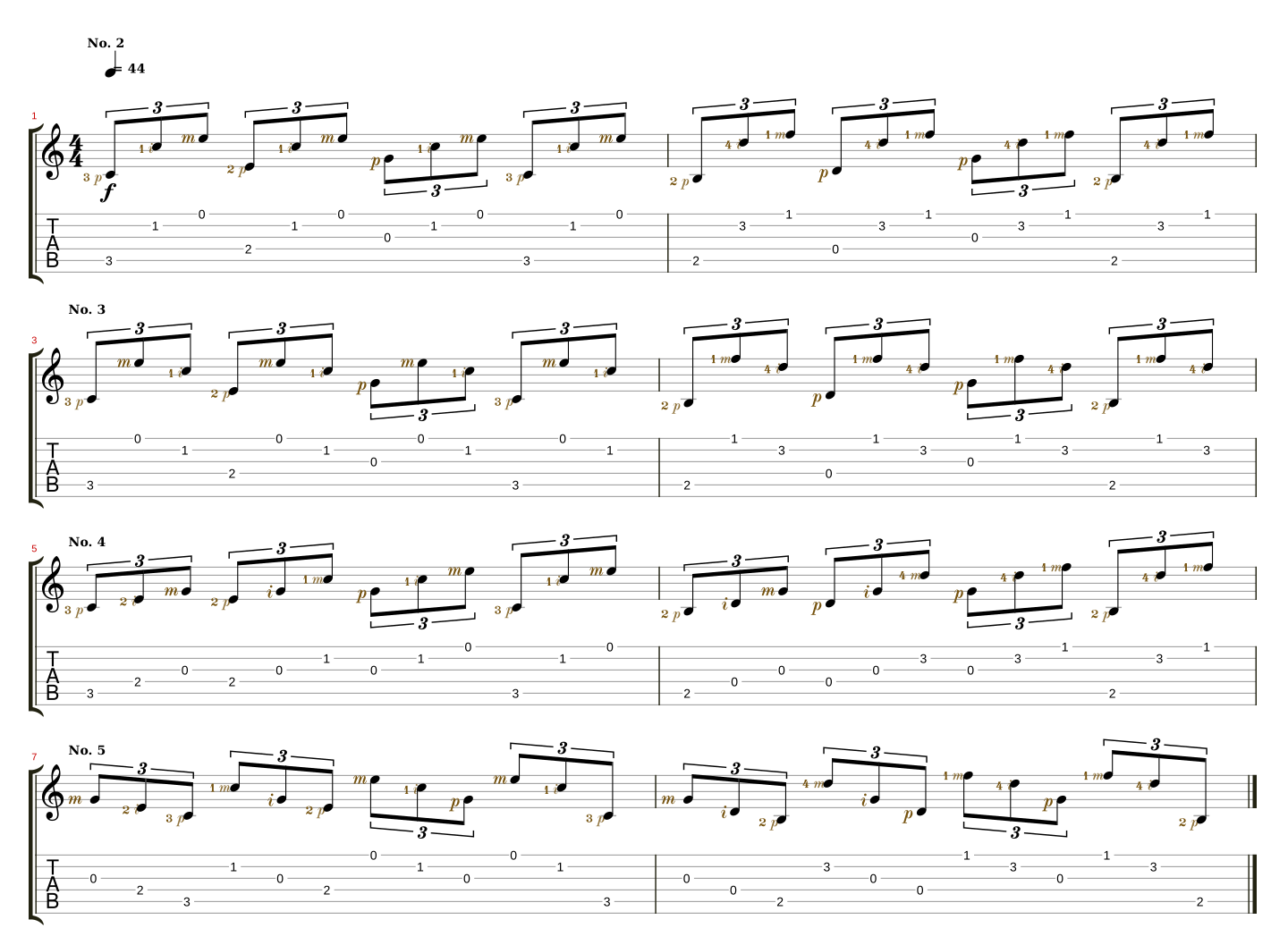
Check for · 2 bars at 48 BPM — Each beat contains 3 attacks on both chords.
More detail
In no. 2, the first beat reads p · i · m. A plus sign joins simultaneous fingers. Move to the next number after two clean bars.
4 Giuliani 6–10
Practise one pattern from 6–10 on C and then on G7.
3 min · 40 bpm · 3 notes per click

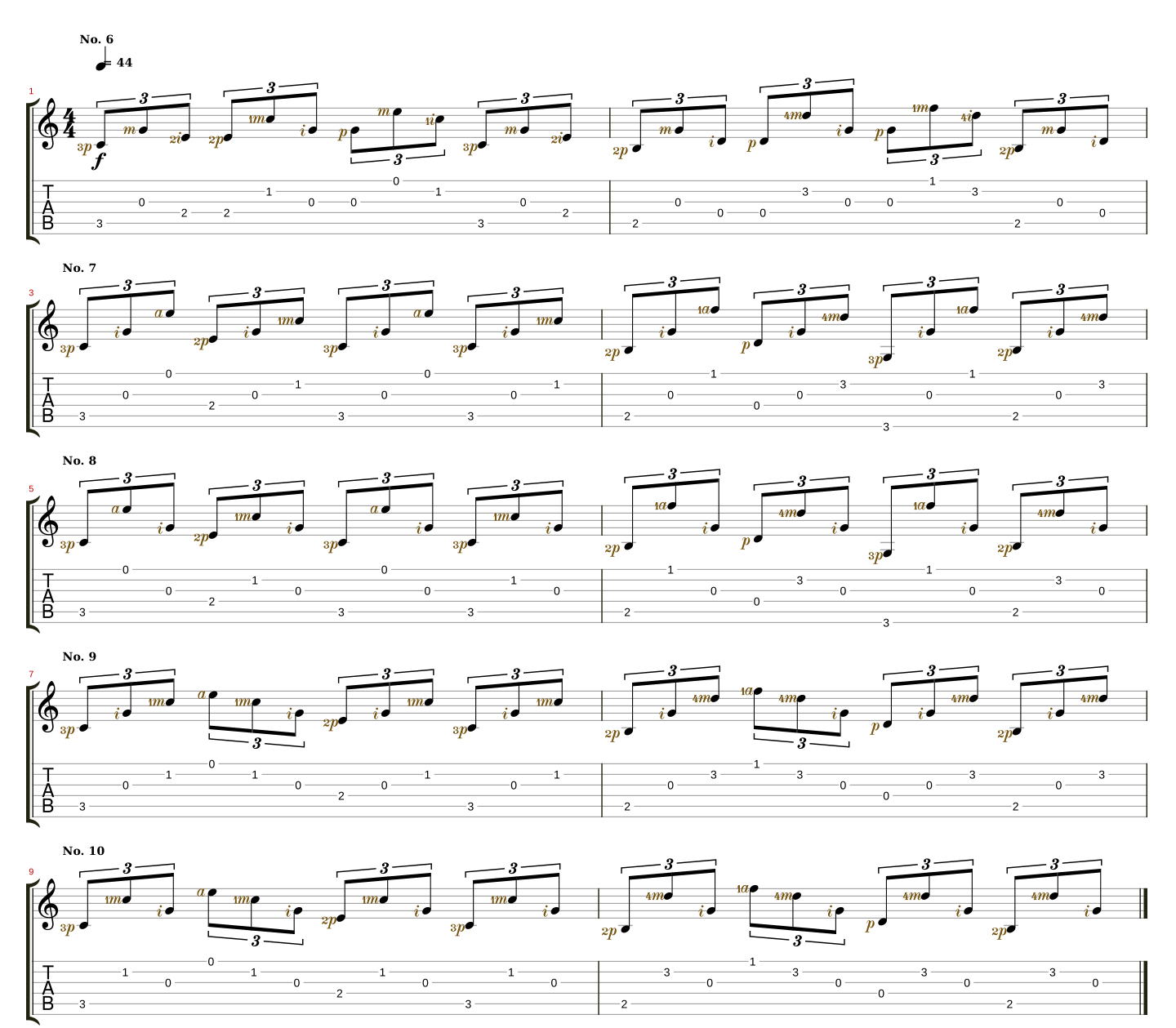
Check for · 2 bars at 48 BPM — Each beat contains 3 attacks on both chords.
More detail
In no. 6, the first beat reads p · m · i. A plus sign joins simultaneous fingers. Move to the next number after two clean bars.
You can move on when…
You pass when, over 2 bars at 48 BPM, each beat contains 3 attacks on both chords.
If a movement feels difficult
The bass overpowers the fingers.
Soften the thumb; play the notes together again without forcing the fingers.
Planting cuts the notes short.
Plant the next finger more gently and a little later; listen to the end of each note.