Level 2 · Working with both hands · 15 min
Sor’s two repeated sections
By the end, you can play Sor’s Op. 60 No. 1 with both repeats.
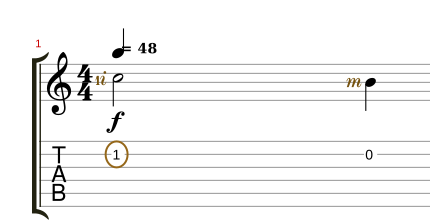
Before this lesson
Lesson steps
1 The opening motif, bars 1–4
Play all four bars, holding each opening note for its written length.
3 min · Quarter note = 48, 1 note per click

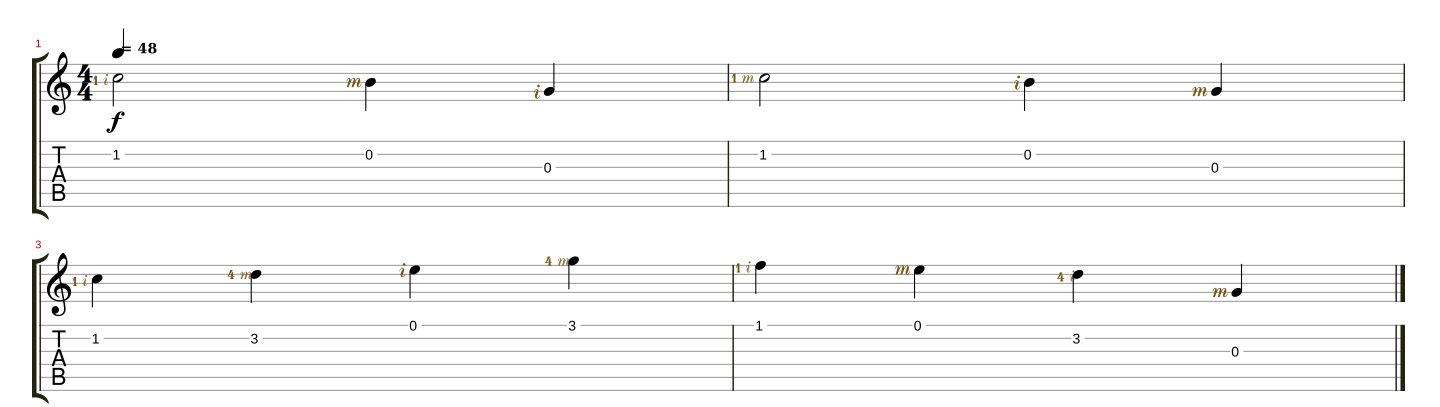
Check for · The opening C lasts two clicks in bars 1 and 2, but one click in bar 3.
More detail
A held note needs no new stroke on the second click.
2 The first ending, bars 5–8
Prepare the three open strings of the chord in bar 8.
3 min · Quarter note = 48, 1 note per click

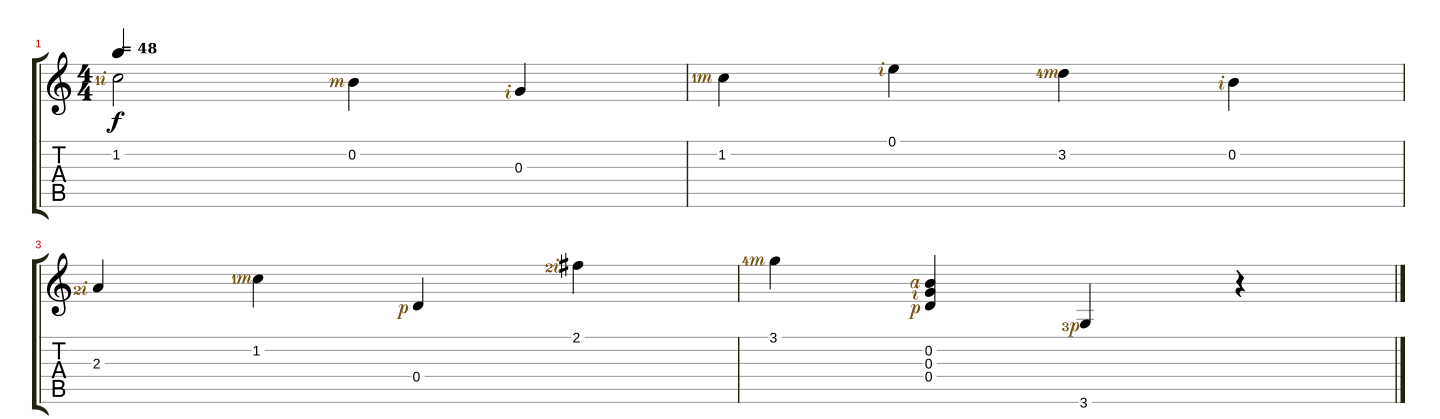
Check for · Strings 4, 3 and 2 sound together on beat two.
More detail
The bass plays alone on click three. Click four is silent.
3 The new opening, bars 9–12
Play bars 9–12, giving each quarter note one click.
3 min · Quarter note = 48, 1 note per click

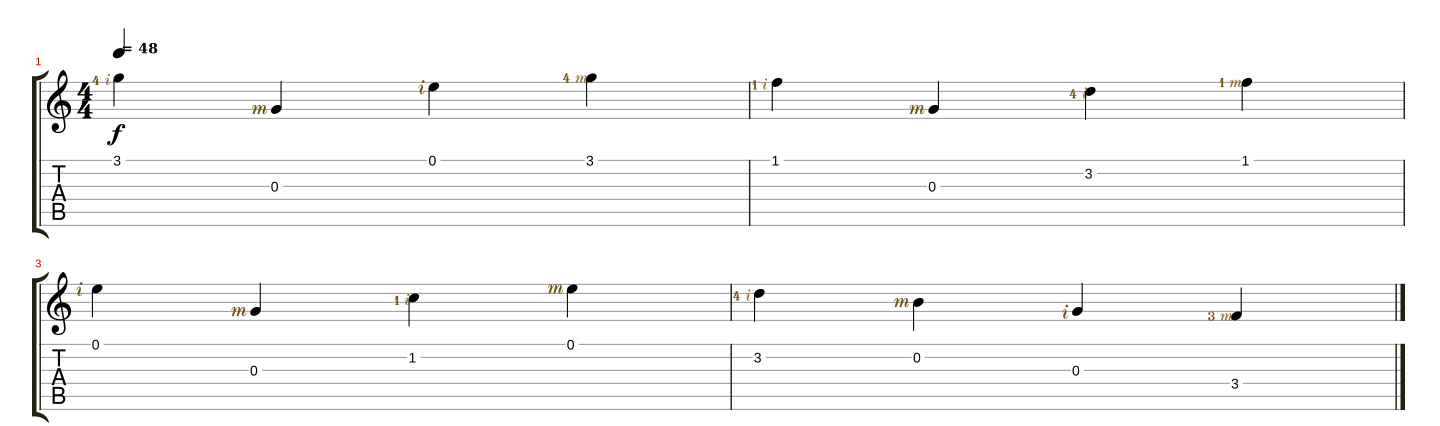
Check for · You hear sixteen evenly spaced attacks.
More detail
Bar 9 begins on high G, string 1, fret 3. Practise finding this starting point on its own.
4 The second ending, bars 13–16
Play bars 13–16 through the final rest.
3 min · Quarter note = 48, 1 note per click

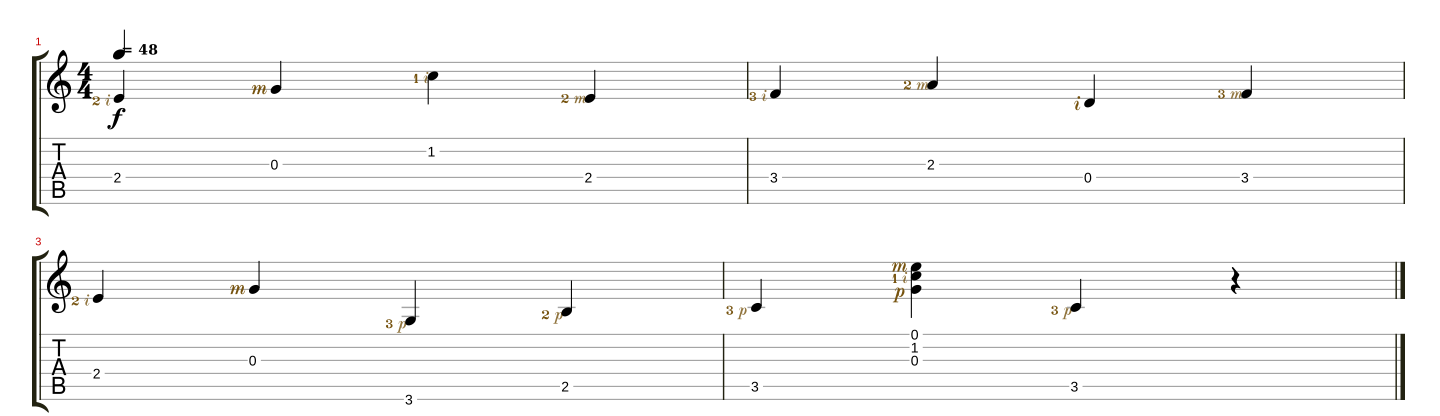
Check for · The final chord fills one click between the two low Cs of bar 16.
More detail
The last group has the same rhythm as bar 8: note, chord, bass, rest.
5 The repeats
Play bars 1–8, 1–8, 9–16, then 9–16.
3 min · Quarter note = 48, 1 note per click
Revisit the tablature · Step 4
Rhythm variations

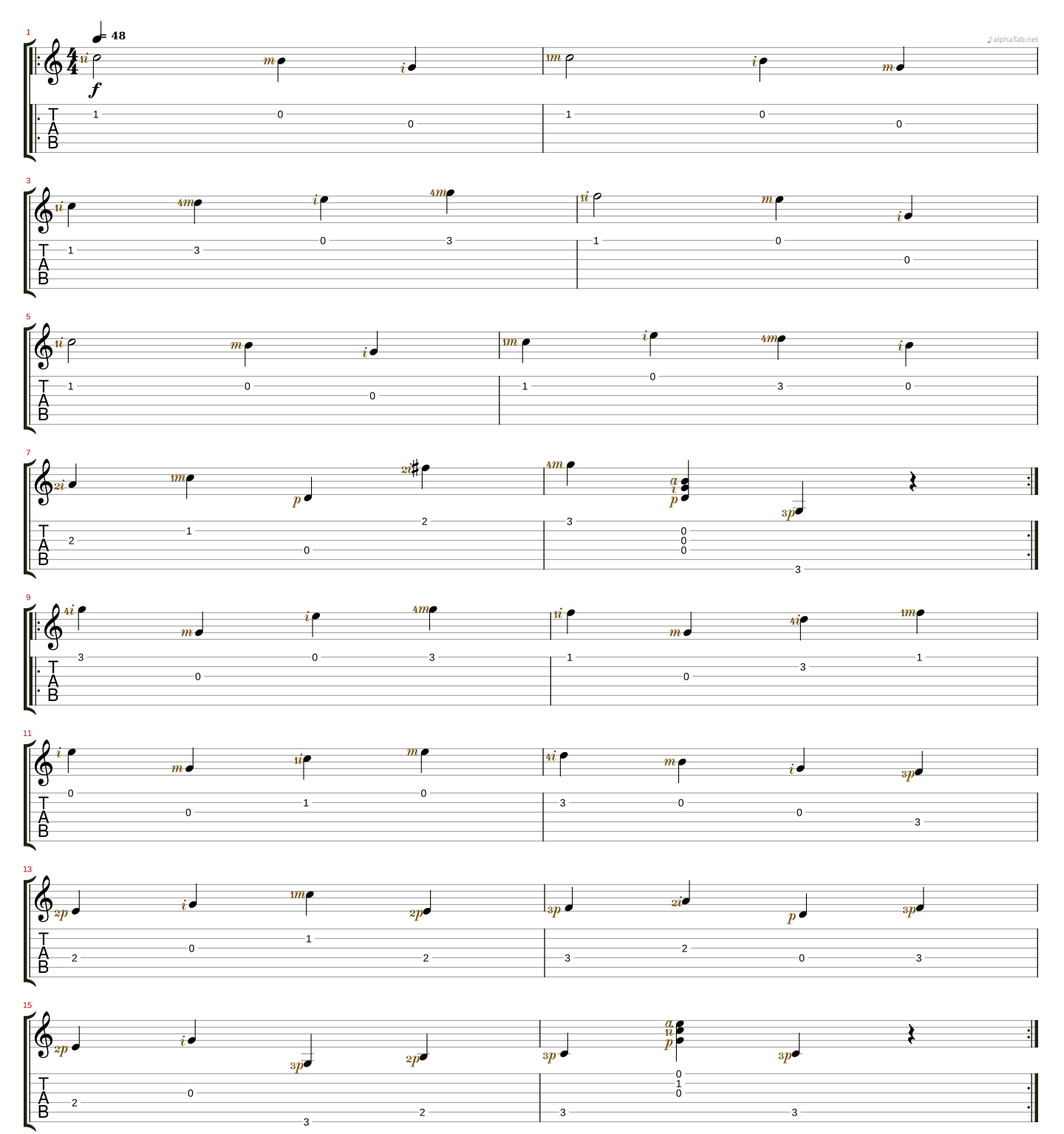
Check for · Each rest in bars 8 and 16 lasts one beat, including on the repeats.
More detail
A repeat asks you to play a section again. On the full tab, dotted double barlines mark each section. Select “Complete piece” to see the full tab.
You can move on when…
You pass when you play each section twice and hear all three notes in the chords at the two endings.
If a movement feels difficult
You keep playing the whole piece without fixing anything.
Isolate the two troublesome bars and reset the counter after a mistake.
The phrases break apart at the join.
Loop the two phrases together, watching their connection.