Level 3 · Classical technique · 20 min
Major scales in the Segovia tradition
By the end you can play two octaves of C without losing the pulse at the shift.
Before this lesson
Lesson steps
1 The C route
Ascend the scale to fret 8 on the first string.
4 min · Quarter note = 48, 1 note per click
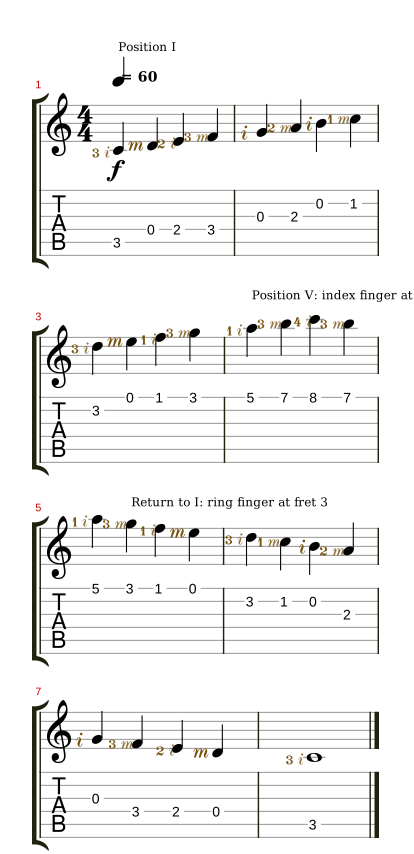
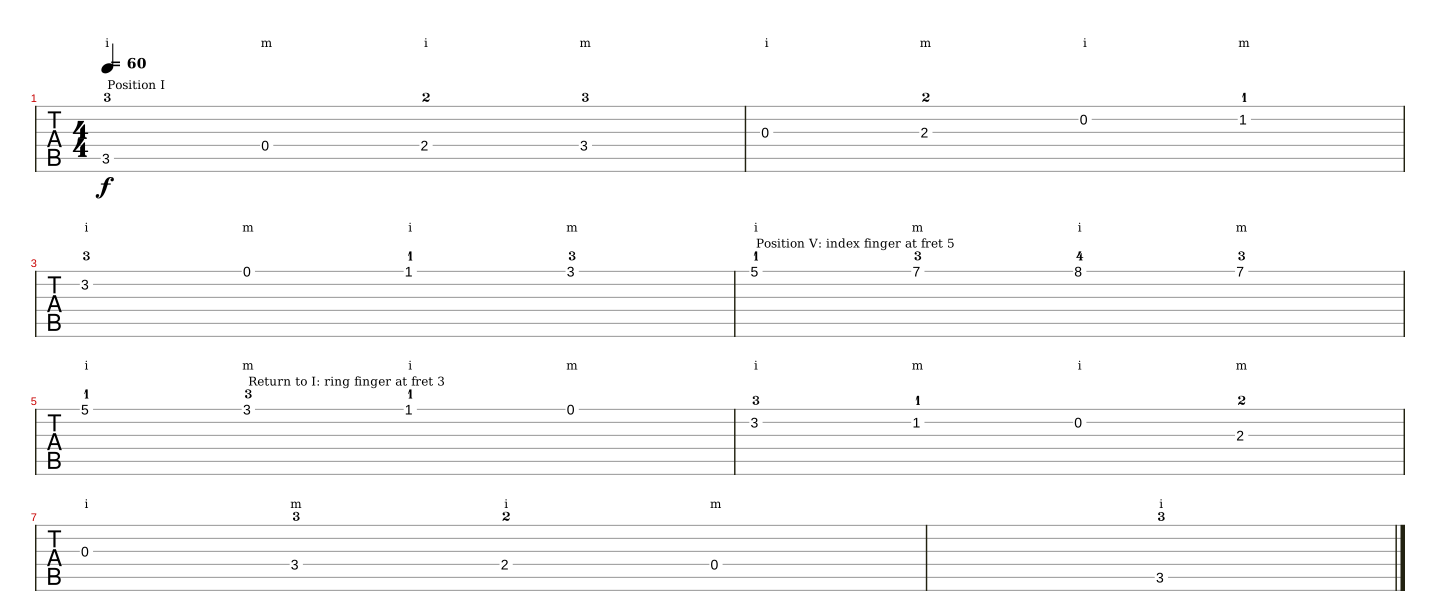
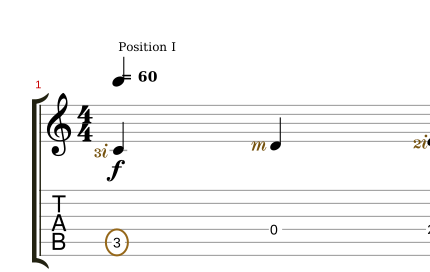
Check for · You start at string 5, fret 3, and reach high C on a click.
More detail
This original fingering follows the principle of practising across positions.
2 The shift
Isolate the move from the ring finger at fret 3 to the index at fret 5.
4 min · Quarter note = 48, 1 note per click

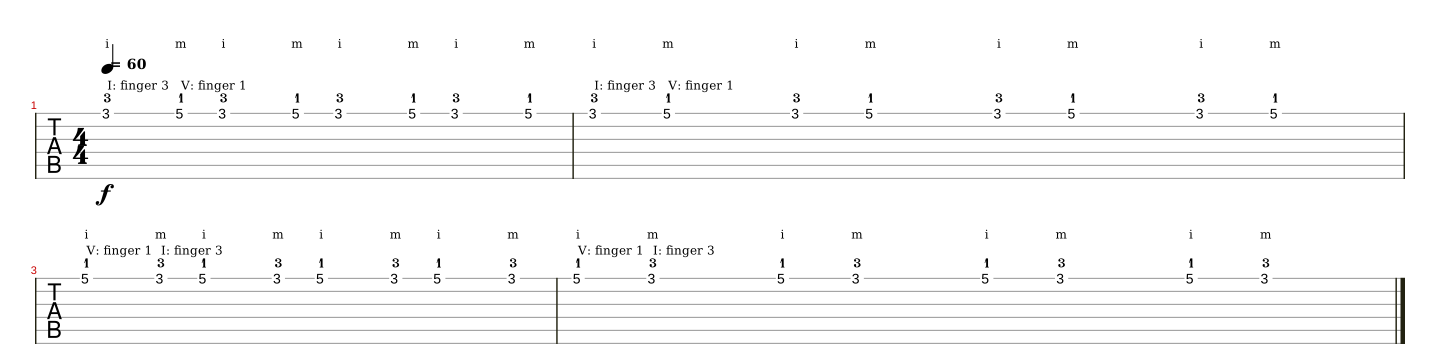
Check for · The shift becomes inaudible.
More detail
Both frets are on string 1. Look at fret 5 before leaving fret 3.
3 The descent
Descend to string 5, alternating i and m.
4 min · Quarter note = 48, 1 note per click
Revisit the tablature · Step 1
Check for · Two consecutive notes are not played by the same finger.
More detail
High C is the turning point. Count it only once.
4 Subdivisions
Play one, two, three and then four sounds per click.
4 min · Quarter note = 48, 1 note per click

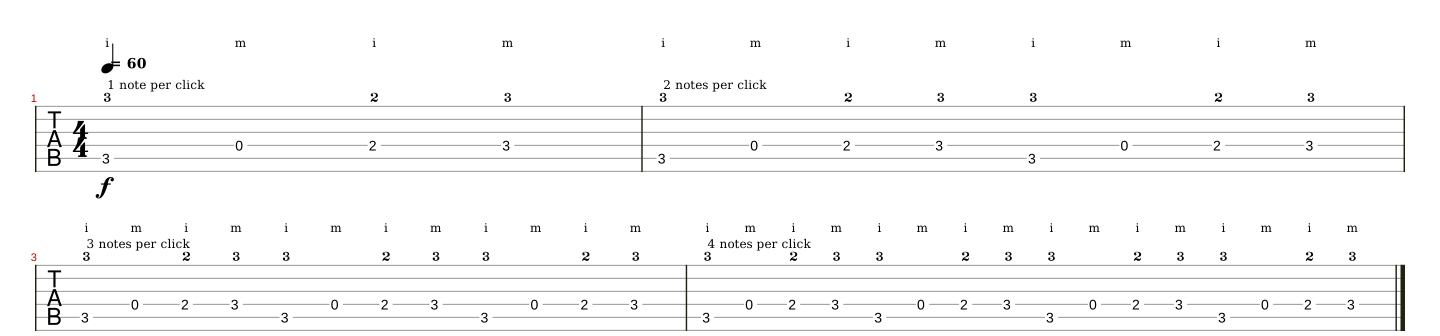
Check for · Each group stays even and clean.
More detail
Go back to two sounds per click if the triplet becomes uneven.
5 One take
Record the complete scale, listening for the first-string shift.
4 min · Quarter note = 48, 1 note per click
Revisit the tablature · Step 1
Check for · Neither the string change nor the position shift stands out.
More detail
Count the clicks around the shift before trying the G scale in the catalogue.
You can move on when…
You pass when three round trips keep an even tone across frets 3 and 5.
If a movement feels difficult
The position shift leaves a gap.
Isolate the shift and alternate long-short, then short-long rhythms.
The groups are uneven.
Return to one note per click at 60, then build the subdivisions back up.