Week 2 · 12 min
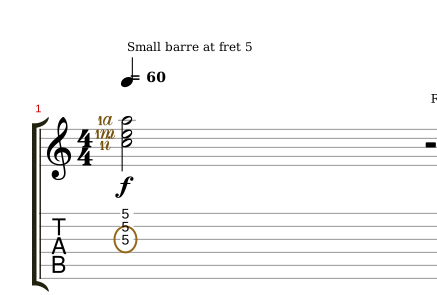
Shift a partial barre
By the end, you can move a three-string barre from V to VII.
Before this lesson
Lesson steps
1 Start again lightly
Release the pressure at every rest shown in the tab.
3 min · 44 bpm · 1 note per click


Check for · 2 bars at 52 BPM — You alternate useful pressure with release.
More detail
The practice time includes rests. Aim for the same sound when you form the barre again.
2 Move from V to VII
Release the pressure between bars and set the index down at fret 7.
3 min · 44 bpm · 1 note per click


Check for · 2 bars at 52 BPM — Strings 3, 2 and 1 ring at fret 7.
More detail
The index covers the same three strings in both positions. Listen to the first note after the shift.
3 Find the pressure threshold
Play the same chord with just enough pressure to clear the buzz.
3 min · 48 bpm · 1 note per click


Check for · 2 bars at 52 BPM — All three notes sound together and the hand releases during the next rest.
More detail
If one string buzzes, move the index closer to the fret before adding pressure.
4 Move from V to VII
Play both bars twice. Release pressure from V to VII and on the return to V.
3 min · 48 bpm · 1 note per click
Revisit the tablature · Step 2
Check for · 4 bars at 52 BPM — all three strings ring at V and VII, including after the return to V.
More detail
The index covers the same three strings in both positions. Listen to the first note after the shift.
You can move on when…
You pass when all three strings ring at both frets over 4 bars at 52 BPM, including the return to V.
If a movement feels difficult
One string under the barre buzzes.
Check each string separately and move your index finger a little closer to the fret.
You barre more strings than necessary.
Return to the partial barre the passage needs.