Week 6 · 12 min
The chromatic ascent in Gran Vals
By the end, you can place two slurred pairs in high position above a waltz bass.
Before this lesson
Lesson steps
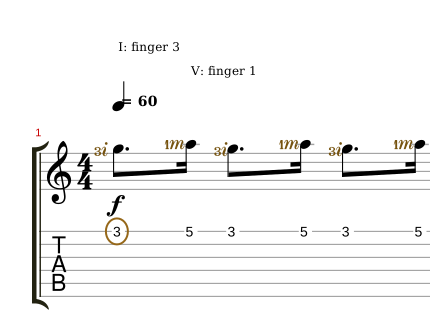
1 Two rhythms
Play the shift in the long-short rhythm of the first bar.
3 min · 48 bpm · 1 note per click

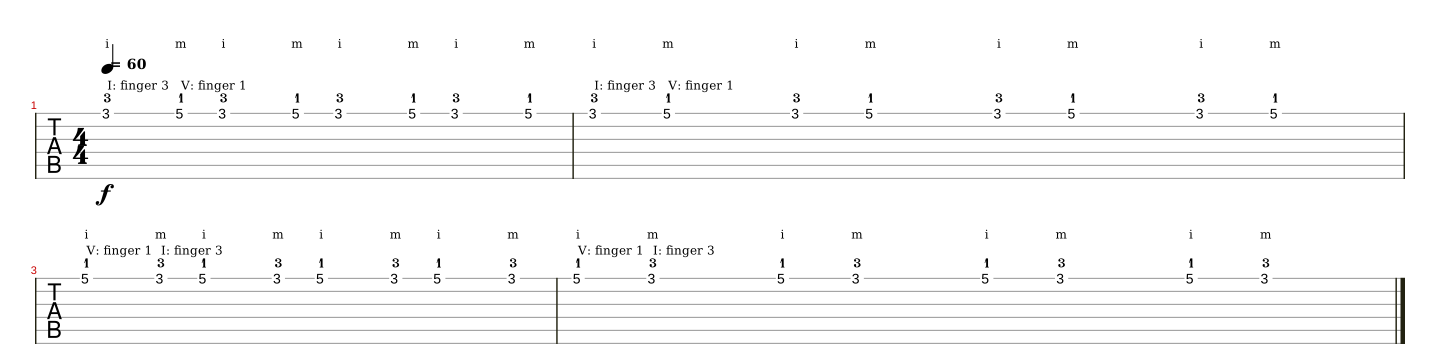
Check for · 2 bars at 56 BPM — The index arrives on time even when its note is short.
More detail
The second bar reverses the note lengths. Start with whichever direction leaves an audible gap.
2 Three octaves in G
Ascend from the first G to high G following the tab fingering.
3 min · 48 bpm · 1 note per click

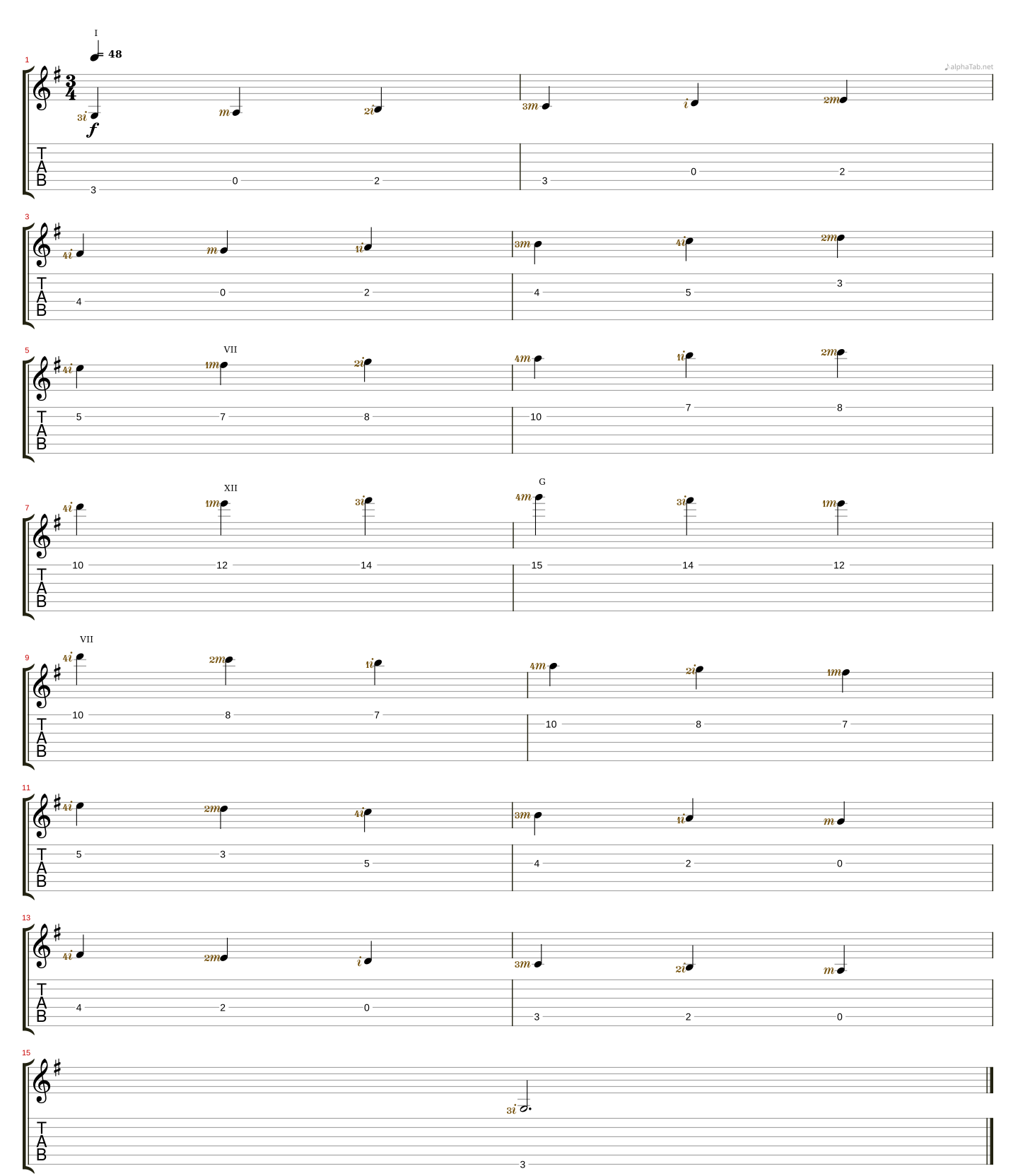
Check for · 8 bars at 56 BPM — High G arrives without a repeated note or a doubled right-hand finger.
More detail
On string 1 aim for fret 12 with the index. High G falls on beat one of bar 8. Hold it when practising the ascent alone.
3 Four frets in the waltz
Hold the bass, then slur 11–12 and 13–14 on string 1.
3 min · 44 bpm · 2 notes per click


Check for · 2 bars at 52 BPM — The bass lasts three beats and the four upper notes fall on beats 2 and 3.
More detail
Play B on open string 2. The melody starts on beat two. Pluck the first note of each pair and slur the next.
4 Four frets in the waltz
Hold the bass, then slur 11–12 and 13–14 on string 1.
3 min · 48 bpm · 2 notes per click
Revisit the tablature · Step 3
Check for · 4 bars at 56 BPM — The bass lasts three beats and the four upper notes fall on beats 2 and 3.
More detail
Play B on open string 2. The melody starts on beat two. Pluck the first note of each pair and slur the next.
You can move on when…
You pass when, over 4 bars at 56 BPM, the bass lasts three beats and the four upper notes fall on beats 2 and 3.
If a movement feels difficult
The position shift leaves a gap.
Isolate the shift and alternate long-short, then short-long rhythms.
A note buzzes.
Stop on that note and move your finger closer to the fret.