Week 2 · 12 min
C major up and down
By the end, you can turn around at the top of the C scale.
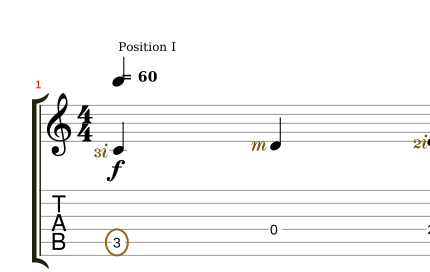
Before this lesson
Lesson steps
1 From one C to the next
Play just the first two bars of the ascending scale.
3 min · 44 bpm · 1 note per click
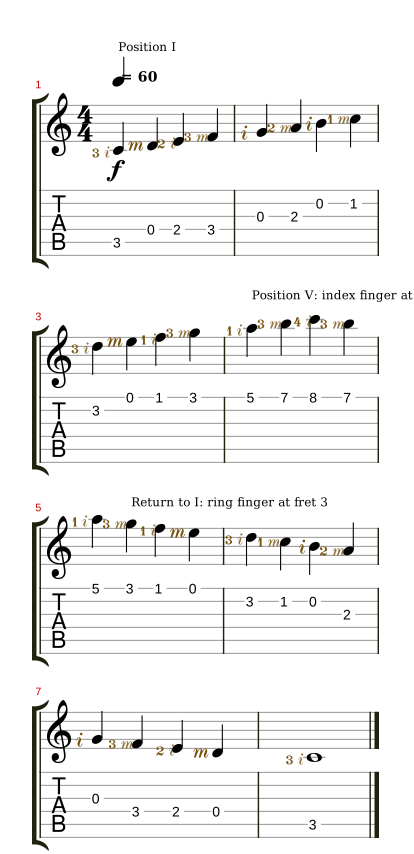
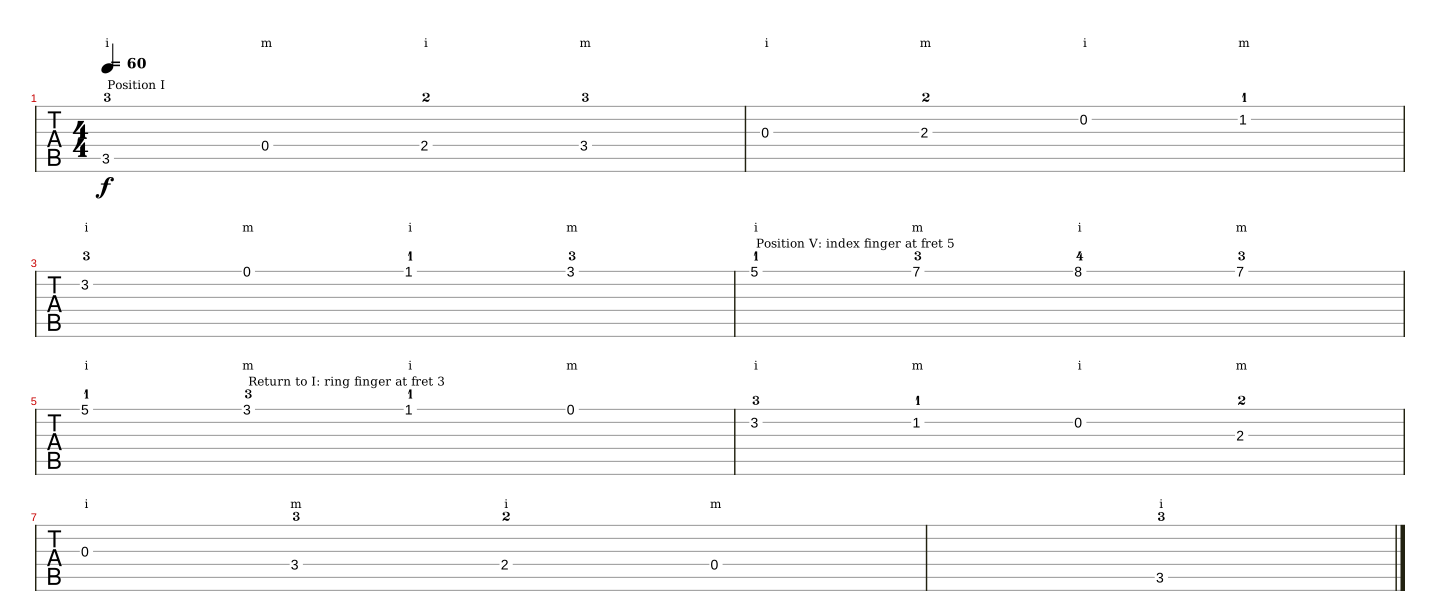
Check for · 2 bars at 52 BPM — The eighth note is C on string 2, fret 1.
More detail
An octave separates two notes of the same name, one higher than the other.
2 The upper octave
Start at bar 3 and reach high C on beat three of bar 4.
3 min · 44 bpm · 1 note per click
Revisit the tablature · Step 1
Check for · 2 bars at 52 BPM — you reach fret 8 on the third beat of bar 4, then return to fret 7.
More detail
The hand shifts as you go from fret 3 to 5: the index takes fret 5.
3 Turn at the top
Play bars 4 and 5, reversing direction at high C.
3 min · 48 bpm · 1 note per click
Revisit the tablature · Step 1
Check for · 2 bars at 56 BPM — The three fret numbers at the turn are 7, 8, 7.
More detail
The line changes direction while the i-m alternation continues.
4 Back to the starting point
Join the ascent and descent at one note per click.
3 min · 48 bpm · 1 note per click
Revisit the tablature · Step 1
Check for · 8 bars at 56 BPM — you play all 29 notes without repeating the top note and hold the final C for four beats.
More detail
The final C is back on string 5, fret 3. If fret 5 comes late, isolate the notes leading into it.
You can move on when…
You pass when you play all 8 bars at 56 BPM, sound high C once and hold the final C for four beats.
If a movement feels difficult
A note buzzes.
Stop on that note and move your finger closer to the fret.
The position shift leaves a gap.
Isolate the shift and alternate long-short, then short-long rhythms.