A prelude in D major with a sustained melody above triplet arpeggios. Tune string 6 to D; leave the other five in standard tuning. Also published as No.15 in La Guitarra, 1925. Play the twelve bars without repeats. The app adds a practice tempo of 48 quarter notes per minute and an opening p.
Skills to prepare
- Sustained melody and triplet arpeggios
- Three independent voices
- Natural harmonic and slurs
Before learning the piece
- App checkpoint: hold one treble note through two softer inner notes, five times. Practise this skill.
- App checkpoint: prepare a small barre before a treble note, five times without tension. Practise this skill.
- App checkpoint: sound five hammer-ons with only one attack each. Practise this skill.
These checkpoints belong to our learning path. They do not set a deadline for your progress.
Tablature and fingerings
The six lines represent the strings, with high E at the top. Numbers show frets; 0 means an open string. The letters p, i, m and a indicate right-hand fingers.

Read the complete static tab · Download the alphaTex file
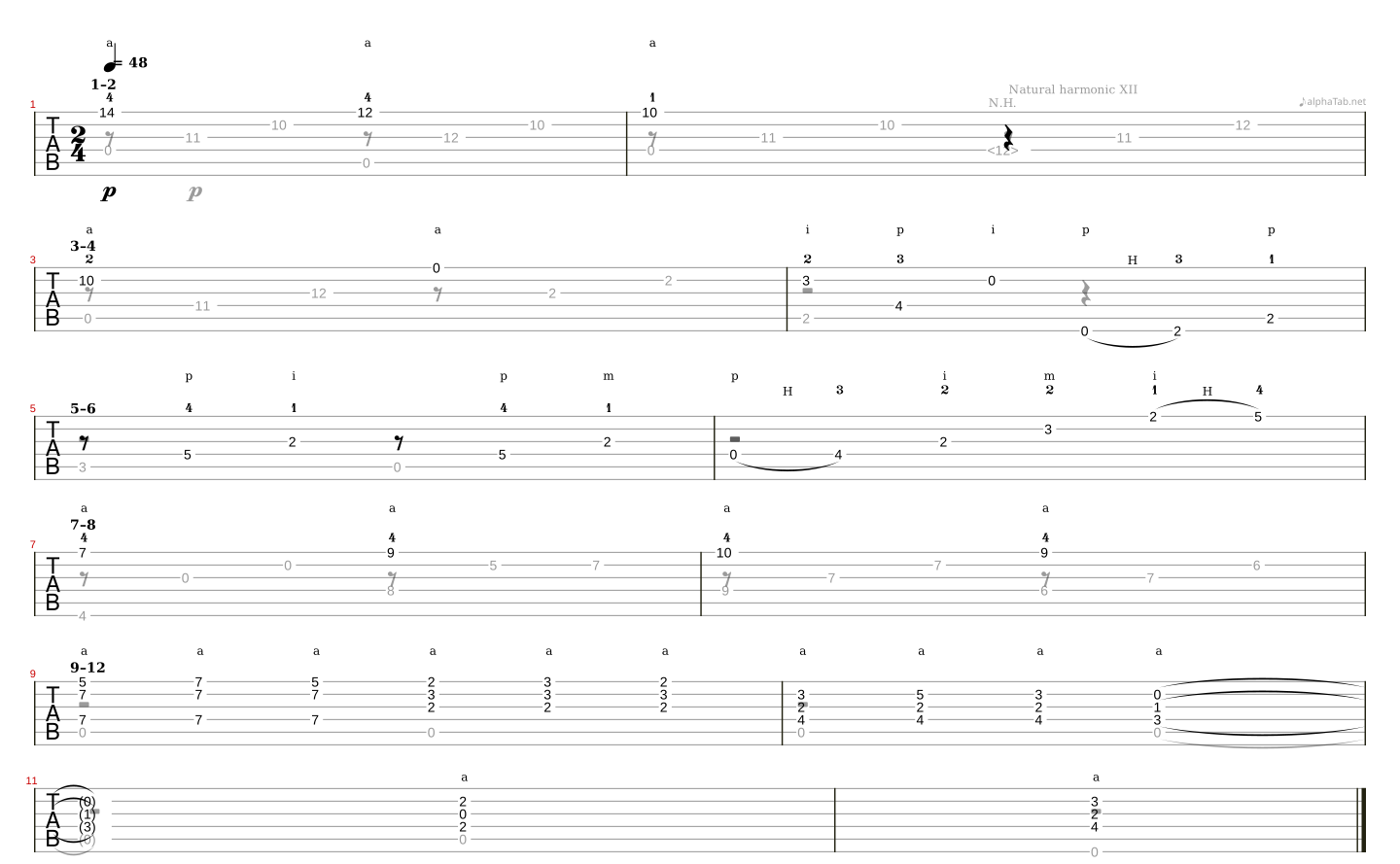
The player and its sounds load when you choose to use them.
Your phrase-by-phrase plan
Work on a short passage. Aim for five clean attempts in a row, then connect two phrases. Bar numbers follow our transcription, including a separately numbered pickup where applicable.
Phrase 1 · bars 1–2
Hold the treble notes through the two inner notes of each triplet.
Phrase 2 · bars 3–4
Prepare the position shift after the high A in bar 3.
Phrase 3 · bars 5–6
In bar 6, keep the slurred notes as present as the plucked notes.
Phrase 4 · bars 7–8
Make the treble notes sing without pressing the inner arpeggios.
Phrase 5 · bars 9–12
Hold the chord tied from bar 10 into 11 without a new attack before the resolution.
Watch and listen
Choose the recording that matches your current goal. Videos load only when you select them and require an internet connection.
Lesson · This is Classical Guitar
General video: review a gentle attack and a clear melody; this lesson does not teach this prelude.
English commentary. Link and metadata checked for our selection.
Sources and transcription choices
The notes follow the credited sources. Fingerings, phrase divisions and practice tempos are editorial learning choices. How our transcriptions work.